India’s Manufacturing Moment: Building the Future of Heavy and Scientific Industry
- Jun 25, 2025
- 4 min read
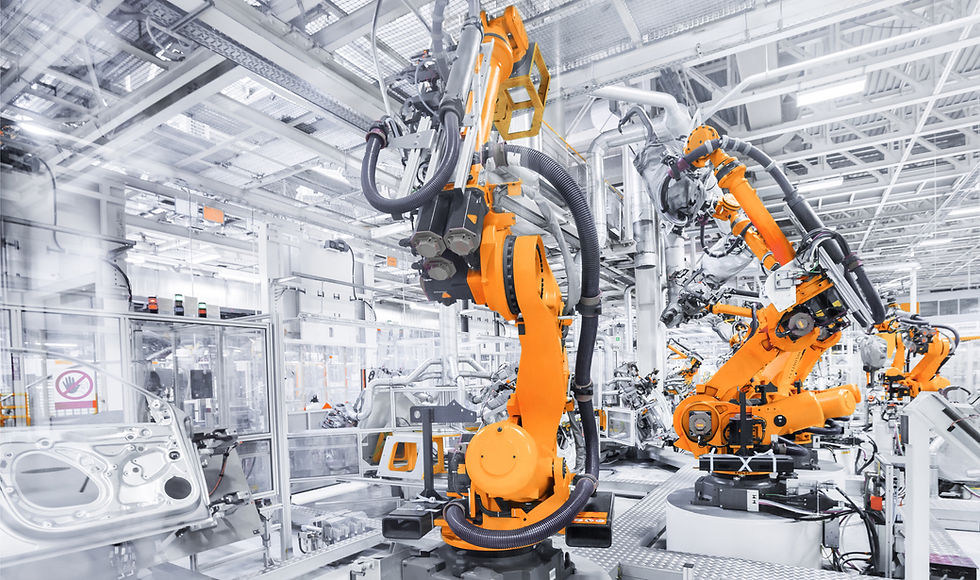
As the world rewires supply chains for resilience and technological sovereignty, the next era of industrial power will not be defined by low-cost production alone—but by countries that can localize and scale high-complexity, scientific manufacturing. India, at the intersection of talent, diplomacy, and digital transformation, is uniquely poised to lead this shift.
India’s opportunity lies not just in infrastructure, but in the depth, distribution, and adaptability of its workforce. For India to emerge as a manufacturing hub for high-growth, scientific industries—such as clean energy, space systems, semiconductors, and advanced instrumentation—it must invest in a globally literate, industry-aligned, and innovation-ready talent pipeline.
And this must be done in partnership with the world.
The Workforce Imperative
India is projected to have the world’s largest working-age population by 2030. But scale is not skill. Scientific and industrial manufacturing—from cryogenic systems and EV testing to power grid instrumentation—requires:
Hands-on familiarity with precision tools
Cross-domain thinking (e.g., thermodynamics + AI)
Exposure to global industrial practices
Pathways from vocational education to leadership roles
This demands targeted, multi-layered workforce development—one that bridges CETs, ITIs, IITs, startups, and industry consortia, in both urban and rural regions.
Multilateral & Bilateral Frameworks: The Enablers of Human Capital
India’s partnerships with global powers are already seeding these ecosystems. Workforce development should now be made a central pillar of these arrangements:
1. U.S.–India: iCET and Beyond
Under the Initiative on Critical and Emerging Technologies (iCET), both nations are aligning on quantum, clean energy, and semiconductor technologies.
Workforce focus: The U.S. National Science Foundation and India’s DST are piloting researcher exchanges in AI, semiconductors, and advanced communications.
Example: The Semiconductor Skill Development Program (SSDP) under India's Digital India agenda can be integrated with U.S. fab training systems from Arizona State University and Purdue.
2. India–EU Clean Energy & Green Deal Partnership
India and the European Union have signed several strategic clean energy pacts.
Workforce angle: India's International Solar Alliance (ISA) and the EU’s Global Gateway program can jointly support solar O&M training, battery analytics certification, and hydrogen plant safety modules.
Example: The Indo-German Energy Forum Academy offers online technical training in PV design and grid integration—this could serve as a model for other European collaborations.
3. India–Australia Critical Minerals and Skills Partnership
With Australia’s abundance of rare elements and India’s demand for clean energy hardware, both countries are co-developing supply chain and skill programs.
Workforce potential: India can benefit from Australia’s vocational training frameworks (TAFE) by adapting them into CETs and MSME skilling zones.
Use case: Joint certifications on battery chemistry, solar cell manufacturing, and EV BMS installation.
4. India–UAE Comprehensive Economic Partnership (CEPA)
The CEPA agreement opens the door for deeper energy, tech, and trade cooperation.
Workforce component: India and the UAE can co-create desert-based clean energy projects and train young professionals in thermal energy storage systems, HVAC, and grid software.
Example: Masdar’s innovation labs and India’s National Skill Development Corporation (NSDC) can collaborate on tailored micro-credentials for green jobs.
Workforce Development: Six Strategic Interventions India Must Prioritize
1. Revamp CETs as Industry-Embedded Talent Factories
Upgrade Tier 2/3 engineering colleges into industrial testbeds and human capital pipelines:
Install shared labs for process simulation, PLCs, and power electronics
Bring in global faculty and technical mentors via digital exchange programs
Host bilateral internships with firms from the U.S., Germany, and Japan
2. Establish Joint Centers of Excellence with Multinational Anchors
Anchor global companies (like GE, Schneider, or Airbus) in CoEs focused on:
Scientific instrumentation
Grid software development
Thermal and fluidic system design
Ensure these centers mentor local SMEs and CET faculty.
3. Launch India–Global Vocational Bootcamps for Scientific Industries
These should focus on:
Space hardware assembly
Semiconductor backend testing
EV drivetrain calibration
Biomedical lab tooling
Co-certified by global universities and India’s skill councils.
4. Expand Work-Integrated Learning and Apprenticeships
Facilitate global industry-sponsored apprenticeships in Indian scientific sectors:
Offer 12–18 month paid rotations in space manufacturing, solar O&M, or cryogenics
Align programs with global trade standards (e.g., ISO 14644 for cleanrooms)
5. Foster Dual-Degree and Micro-Credential Pathways
Enable Indian students and workers to receive micro-credentials from global partners (Coursera–NSDC, edX–IITs) in:
AI for Energy Systems
Thermal Systems Simulation
Hardware–Software Co-Design for Grids
6. Incentivize MSMEs and Public Sector Labs to Upskill Workers
Provide tax credits or PLI-like incentives to manufacturers and PSUs that:
Send technicians to international training
Digitize their shop-floor curriculum
Host women-led upskilling programs in CETs
Conclusion: Building the Workforce of the Future, Together
India’s rise as a scientific manufacturing leader won’t come from infrastructure alone—it must be skilled, certified, and collaborative. With the right multilateral alignment, and by treating workforce development as strategic diplomacy, India can lead the next phase of global industrialization—not just as a factory, but as a knowledge powerhouse.
The time to act is now. If policies prioritize people as the platform, India’s scientific workforce will power the next generation of global manufacturing ecosystems.

Comments